 EN
EN  TH
TH 
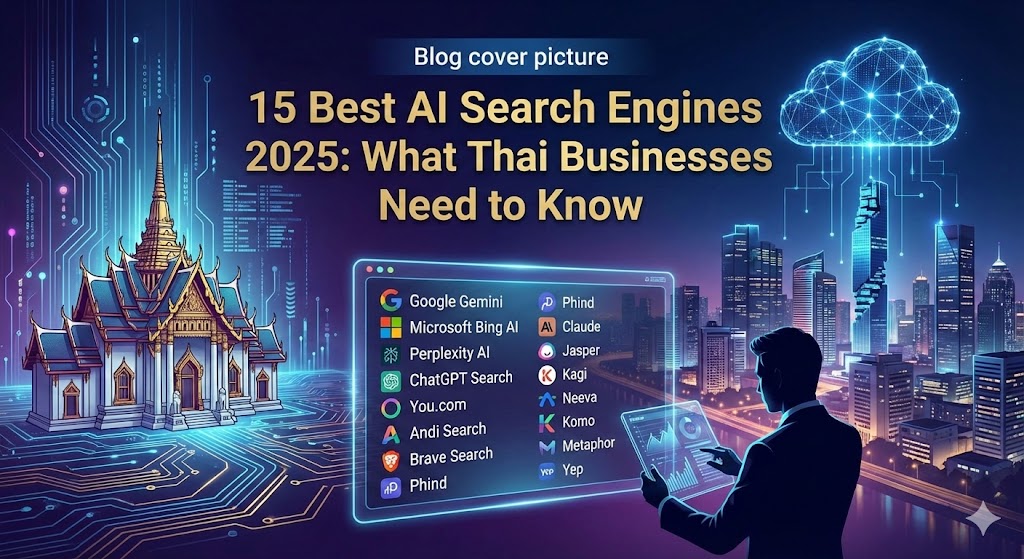
The AI search landscape has exploded beyond Google, with dozens of new platforms now competing for market share. For Thai businesses, the challenge isn’t just keeping up with new platforms, it’s understanding which ones actually matter and how they handle Thai language content.
The reality is stark: Thai requires 2.62 to 3.8 times more tokens than English and constitutes only 0.5% of AI training data, creating structural performance gaps. No standardized Thai language benchmarks exist for commercial AI search platforms, meaning performance claims often come from marketing rather than objective testing.
This guide examines 15 AI search platforms, evaluating their market presence, capabilities, and Thai language realities.
The Major Players
1. Google AI Overviews

Google AI Overviews now appear in over 50% of all searches, doubling from 25% coverage in August 2024. For Thailand, where Google commands over 97% search market share, this platform is non-negotiable.
The AI Overviews system combines Gemini AI models with existing SEO metrics to determine answers. Research shows 92.36% of AI Overview citations link to domains ranking in the organic top 10, meaning traditional SEO remains foundational.
Powered by Gemini, which supports 180+ languages including Thai, the platform demonstrates functional Thai capability based on user reports, though no published benchmarks compare Thai versus English performance.
2. ChatGPT Search
ChatGPT Search represents the fastest-growing challenger, with projections suggesting 1% or more market share in 2025, translating to over $1.2 billion in revenue potential (these numbers are speculative but based on multiple reports). Integrated into ChatGPT’s interface, it combines real-time web search with language model synthesis to give the users more “specific” search results.
The platform shows extreme Wikipedia reliance, nearly 48% of top citations, and requires domain authority of 60+ for consistent visibility. ChatGPT supports more than 80 languages including Thai, but user reviews consistently note it “struggles to effectively handle Thai language compared to Gemini and Claude” with “highest accuracy in English.”
3. Perplexity
With 10 million monthly users, Perplexity positions itself as an AI answer engine with cited sources. The platform employs a three-layer reranking system and emphasizes authoritative domains and fresh content.
Perplexity can retrieve, understand, and summarize content from multiple languages simultaneously. The app supports Thai in its interface, though its multilingual synthesis approach works better than pure Thai queries.
4. Microsoft Copilot (Bing AI)
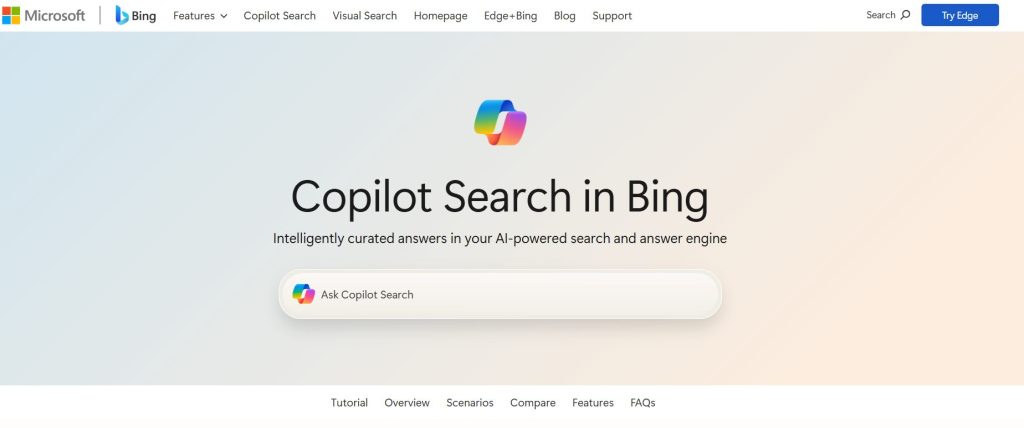
Built on GPT-4 and integrated into Microsoft 365, Copilot’s relevance for Thailand remains limited given Bing’s minimal search market share versus Google’s 97% dominance. The platform shows similar Thai language limitations as ChatGPT given the shared GPT-4 foundation, with no specific Thai optimization documented.
5. Google Gemini (Standalone)
Separate from AI Overviews, standalone Gemini operates as a conversational chatbot with both free and paid tiers. Gemini supports up to 180 languages including Thai, and Gemini Live now supports Thai voice interactions.
User testimonials suggest strong Thai comprehension, though these claims come from marketing materials rather than peer-reviewed benchmarks.
Privacy-Focused Platforms
6. You.com
You.com offers customizable search with AI synthesis and privacy positioning through no user tracking. This means that the platform allows users to personalize search experiences with preferred sources and content types without tracking user data. Users can adjust how prominently AI summaries appear versus traditional links. As of now, no documented Thai support exists, with primary focus on English-language content.
7. Brave Search with AI
Brave Search operates on an independent index, meaning it doesn’t rely on Google or Bing infrastructure. This independence supports Brave’s privacy-first philosophy: no tracking, no user profiling, ad-free results. Leo, Brave’s AI assistant, provides summarization while maintaining privacy commitments. The platform serves primarily English-speaking audiences with minimal multilingual optimization.
8. Kagi
Kagi uses a paid subscription model starting at $10 per month for 300 searches, with unlimited plans at higher tiers. The platform argues subscriptions align incentives with user satisfaction rather than advertising revenue. Kagi add-on AI capabilities like ‘Kagi Assistant’ and ‘Quick Summary’ that are optional and on-demand services. The service targets primarily English-speaking, privacy-conscious users willing to pay for search quality.
Developer & Technical Platforms
9. Phind
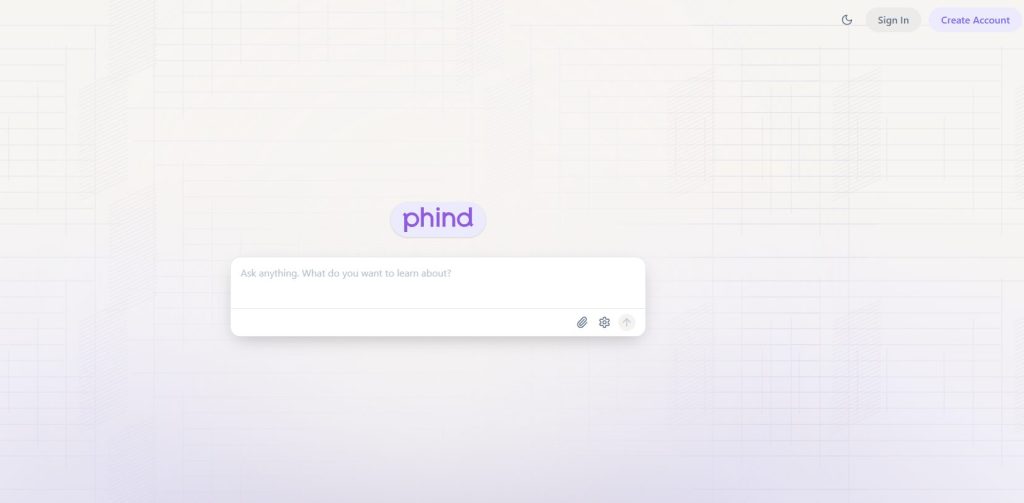
Phind specializes in AI search for developers, finding code examples and technical documentation with impressive speed. Thai support is not applicable, as technical content exists almost exclusively in English.
10. Arc Search
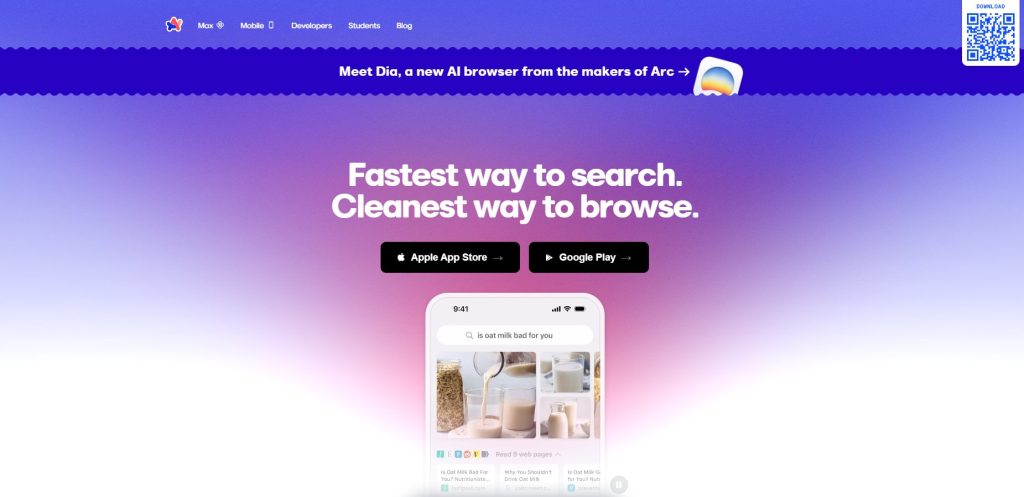
Arc Search is a mobile-first AI search engine from The Browser Company that automatically searches multiple sources and generates a custom results page for each query. Rather than showing a list of links, Arc Search creates a unique webpage with synthesized information, sections, and citations. The platform emphasizes speed and mobile optimization for users wanting quick answers without clicking through multiple results.
11. Consensus
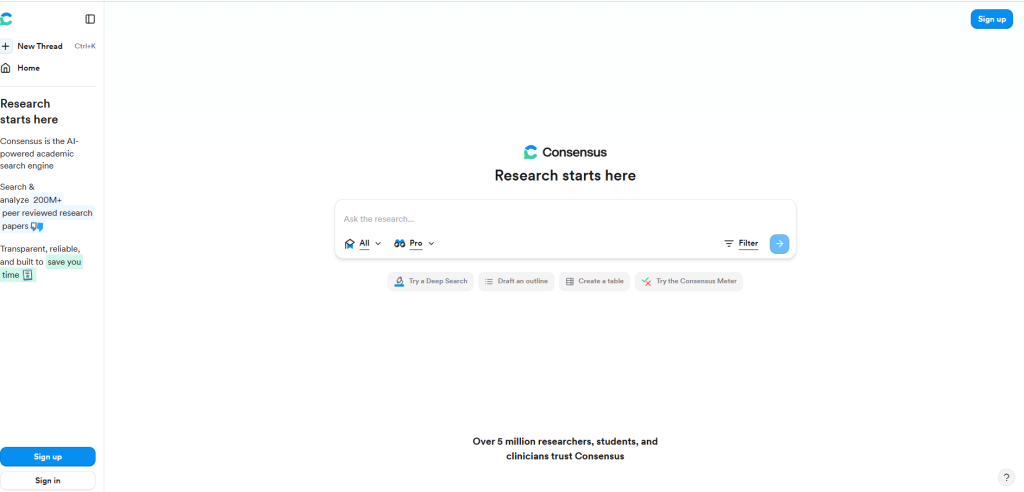
Consensus focuses exclusively on academic paper search and synthesis, providing evidence-based answers backed by peer-reviewed research. The platform extracts findings from scientific literature and synthesizes them with proper citations. This makes Consensus valuable for researchers, students, healthcare professionals, and anyone seeking scientifically-backed information. The platform serves English-language academic publishing exclusively.
12. Elicit
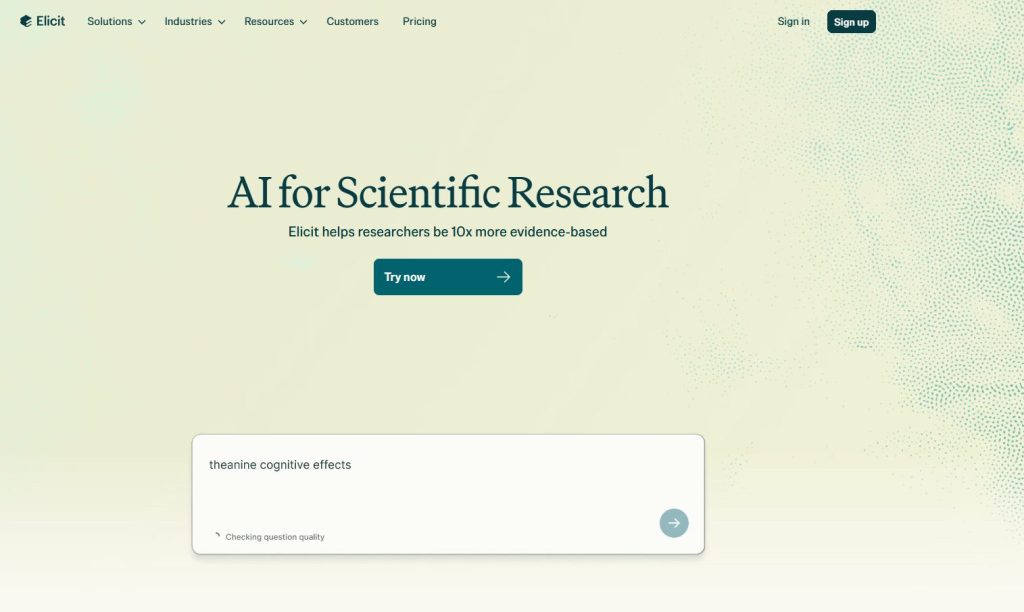
Elicit is an AI research assistant that automates literature reviews and academic research tasks. Key features include automated paper summarization, data extraction across multiple papers, and research question answering based on scientific literature. The platform particularly serves systematic reviews and meta-analyses, focusing on English academic content reflecting international scientific publishing norms.
Additional Platforms & Thai Models
13. Andi
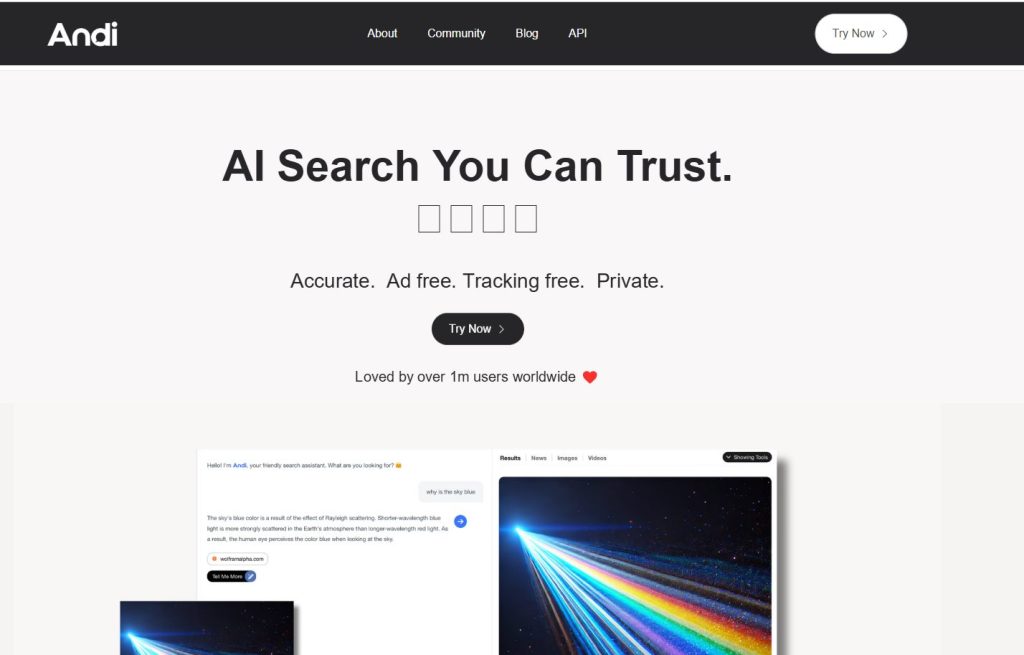
Andi offers a conversational search interface with “search for the next generation” among other claims. The platform combines AI-powered answers with a clean, ad-free interface where users can ask questions naturally rather than formulating keyword queries. The result is direct answers along with relevant sources rather than a list of links. Thai language support remains undocumented, with focus on English-language queries.
14. OpenThaiGPT
OpenThaiGPT is a Thai chatbot system developed as open source with over 2 million Thai instruction pairs. It is important to note that this is a chatbot, not a search engine. OpenThaiGPT does not perform real-time web search or crawl current information. It excels at Thai language understanding and conversation within its training data.
15. Typhoon
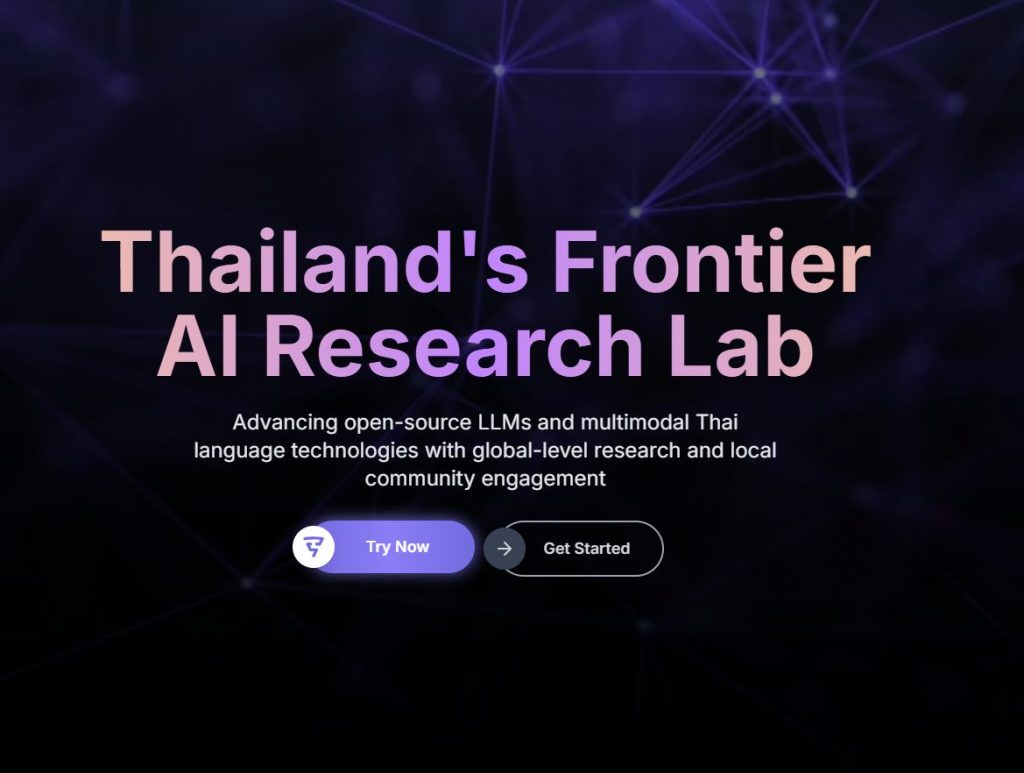
Typhoon is a Thai language model achieving GPT-3.5 parity in Thai while being 2.62 times more efficient in tokenization. Developed by SCB 10X, Typhoon demonstrates strong performance on ThaiExam benchmarks. Like OpenThaiGPT, Typhoon is a language model rather than a search engine with no real-time web search capabilities.
The Bottom Line
Our best AI search engines of 2025 list shows extreme concentration despite platform proliferation. Google AI Overviews dominates with 50%+ query coverage and 97% Thai market share, making it non-negotiable. ChatGPT Search grows fastest at 1%+ projected share, while Perplexity serves niche research audiences.
Thai language support is available on only a couple of models, which shows how limited AI search is in Thai. Only Google AI Overviews and Gemini demonstrate functional Thai capabilities, though objective benchmarks remain absent. The 2.62 to 3.8 times tokenization penalty affects all platforms universally.
Most emerging AI search platforms (You.com, Brave, Kagi, Phind, Metaphor, Consensus, Elicit, Andi) remain English-focused with minimal Thai optimization. Developer and academic platforms serve exclusively English content by design.
It is also important to note that many of these services are based on models that are used by other services and that claims made by each service might not be reflected in their performance. With any AI service, one must exercise caution and check to see if the results match your search criteria and intent.
For Thai businesses, Google’s overwhelming dominance simplifies prioritization. Understanding these 15 platforms contextualizes the AI search landscape, but the reality remains clear: Google AI Overviews is critical, with ChatGPT and Perplexity as secondary considerations for specific use cases or international audiences.