
The numbers tell a remarkable story about the use of artificial intelligence in marketing. 88% of marketers now use AI in their daily work, with 60% using AI tools every single day. This isn’t hype or speculation anymore. AI has become a part of infrastructure for modern marketing teams, enabling faster content creation, deeper audience insights, and automated workflows.
If you’re looking for the best AI tools for content writing, AI tools for social media management, or AI research tools to accelerate competitive analysis, understanding what’s available has become critical knowledge. Here are 15 AI tools that we recommend for marketing in 2025.
AI Tools for Content Creation & Writing
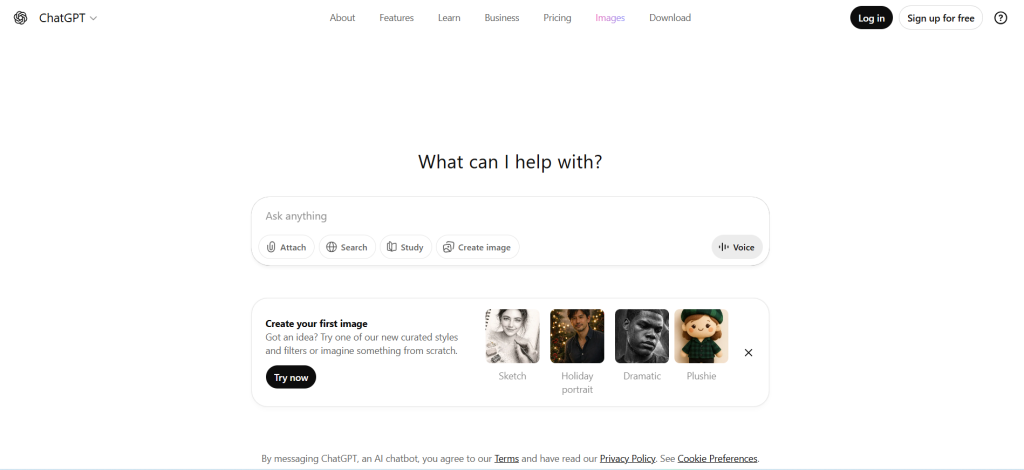
ChatGPT from OpenAI dominates the AI landscape with 90% usage among marketers who use AI tools. As a conversational AI assistant, ChatGPT excels at generating blog outlines, drafting social media captions, brainstorming campaign ideas, and writing full articles from detailed prompts. The key advantage lies in its versatility and natural language understanding, which allows it to adapt tone, style, and complexity based on your instructions.
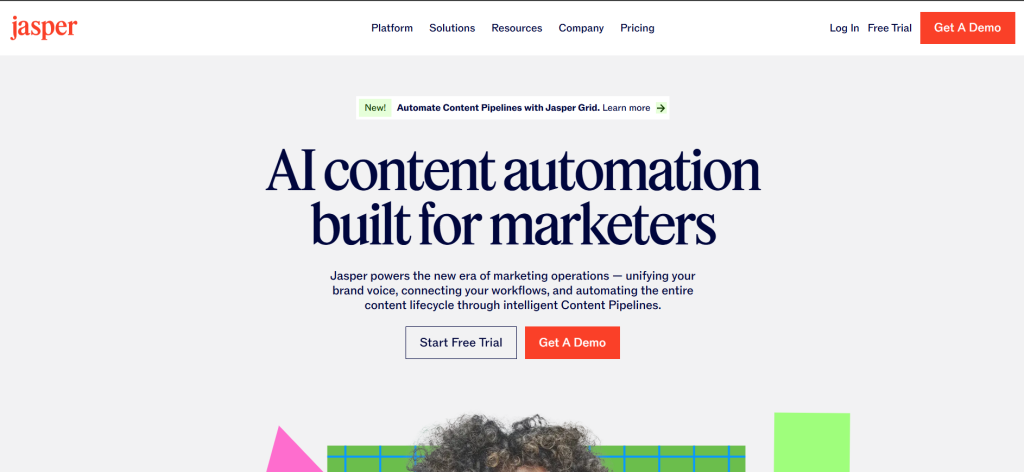
Jasper is purpose-built AI software for marketing content creation and it has been one of the first platforms in this field. It offers over 50 specialized templates for different content types including blog posts, ad copy, social media content, and email campaigns. Jasper takes a brand voice-focused approach, which allows teams to train the AI on their specific tone and messaging guidelines. Jasper also includes SEO optimization features and can generate content in multiple languages, which means it is a comprehensive solution for scaling content production.
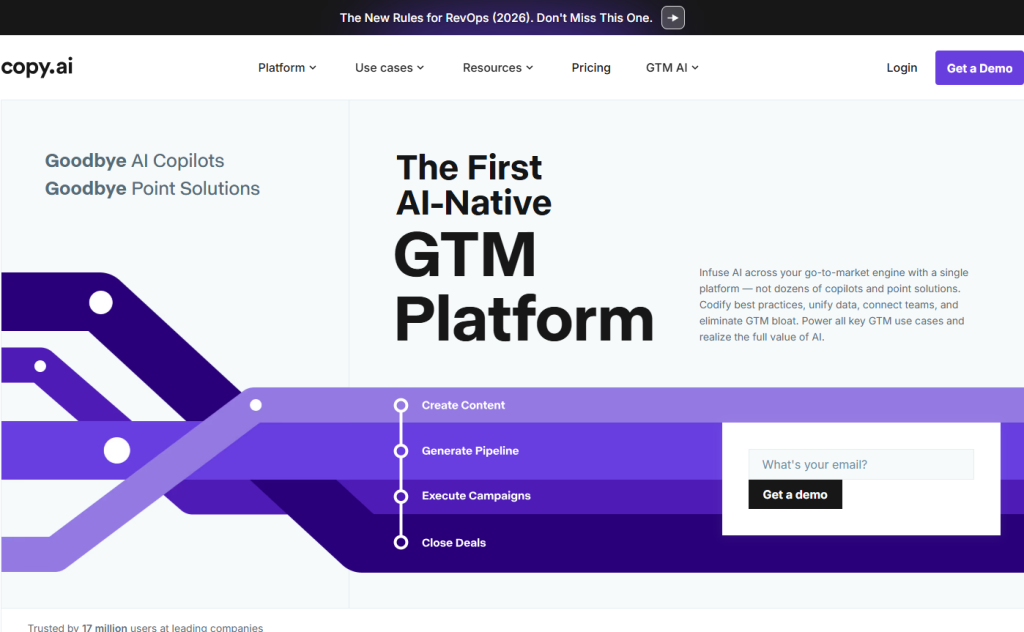
Copy.ai focuses specifically on short-form marketing copy, making it ideal for social media posts, ad headlines, product descriptions, and email subject lines. For businesses running multiple campaigns simultaneously, Copy.ai’s speed and variation generation make it a best AI tool for producing high volumes of targeted copy.
AI Tools for Social Media Management
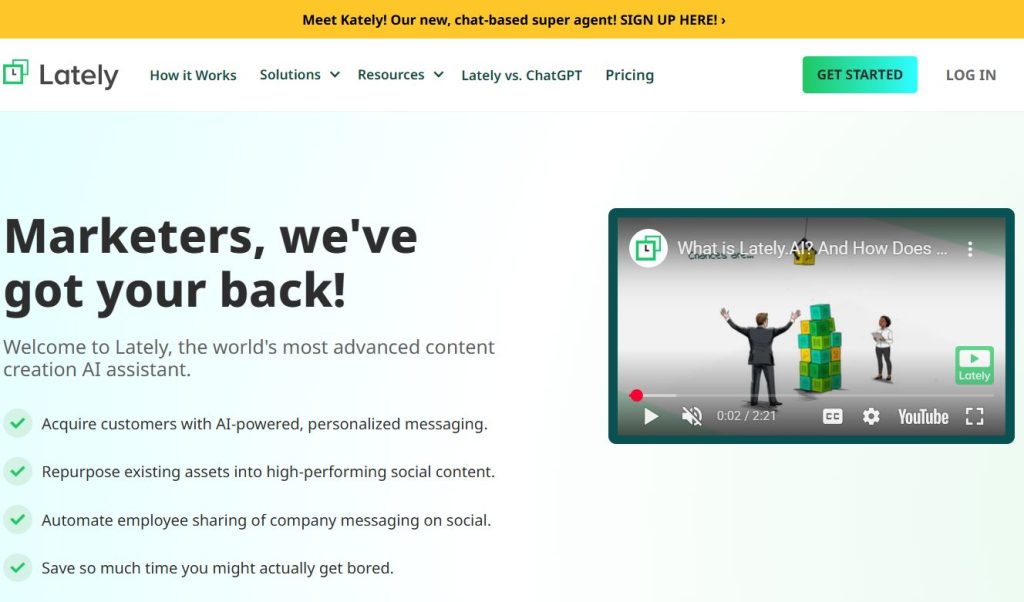
Lately identifies key messages, and generates dozens of social posts optimized for different platforms and audiences. This AI workflow tool eliminates the manual process of repurposing blog posts, videos, or reports into social content, saving marketing teams hours while maintaining consistent cross-channel messaging.
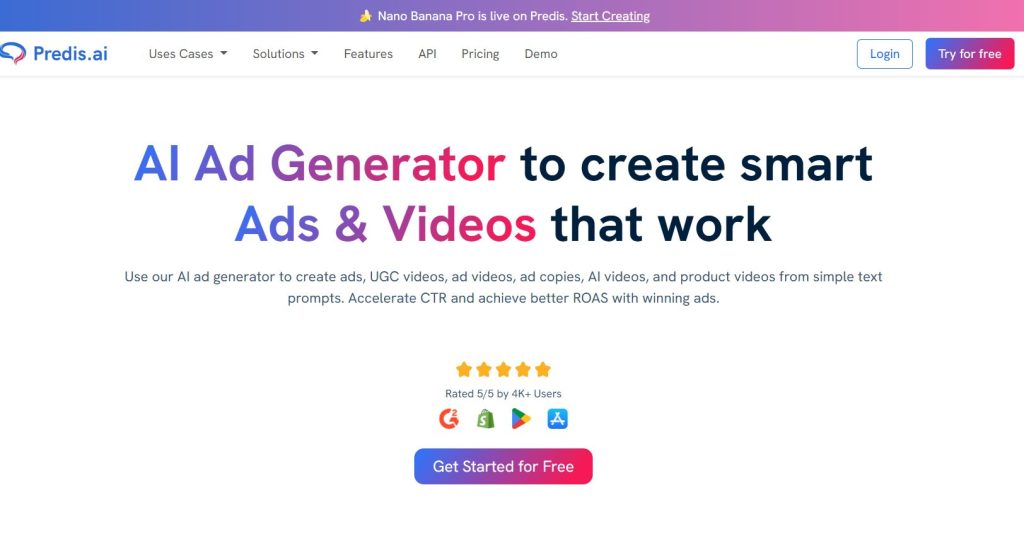
Predis.ai combines content generation with visual design capabilities specifically for social media. The AI creates both the copy and accompanying graphics, generating complete social media posts ready for scheduling. Marketers input their product or message, and Predis.ai analyzes trends, suggests optimal posting times, and produces variations suited to different platforms like Instagram, Facebook, and LinkedIn.
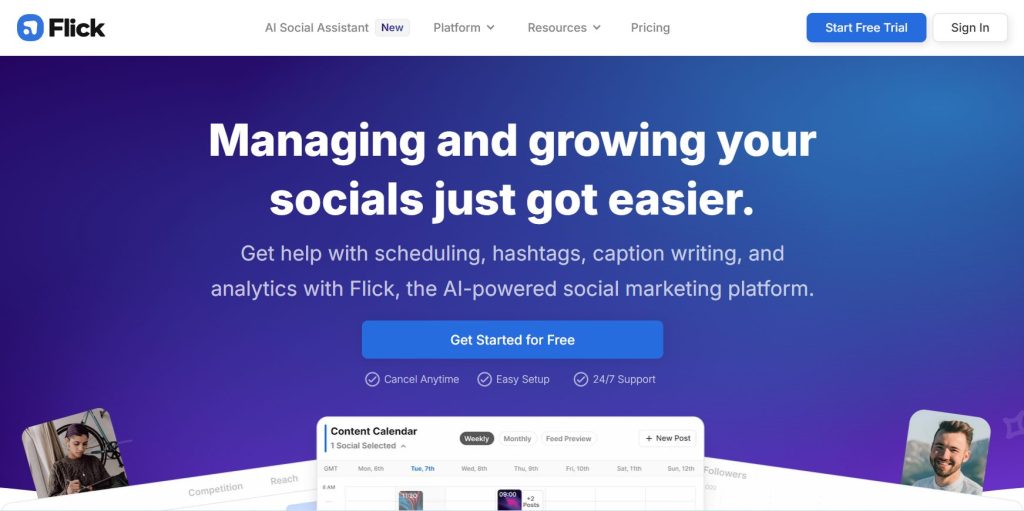
Flick specializes in AI-powered social media strategy and scheduling, with particularly strong capabilities for Instagram and TikTok. The platform’s AI assists with hashtag research, caption writing, and content planning based on audience behavior analysis. Flick’s scheduling features use AI to recommend optimal posting times and content types based on when your specific audience is most active.
AI Tools for Visual Content & Design
Midjourney is an AI image generator that produces detailed and artistic visuals from text descriptions. Marketing teams use Midjourney to create unique campaign imagery, social media graphics, website hero images, and concept designs without hiring photographers or illustrators. The AI understands complex prompts including artistic styles, lighting conditions, and compositional elements, allowing precise creative direction.
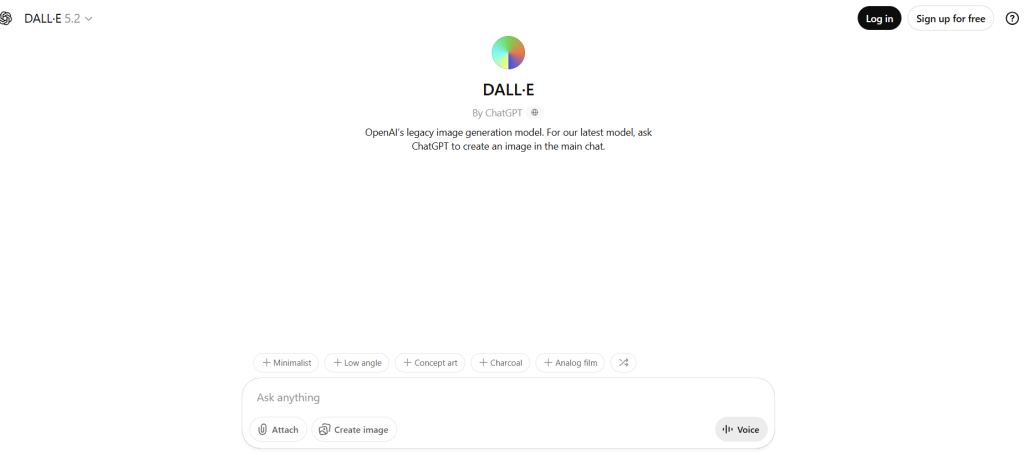
DALL-E from OpenAI integrates directly into ChatGPT, making AI image generation accessible within conversational workflows. Marketers describe needed visuals in natural language, and DALL-E generates multiple variations instantly. For quick social media graphics, blog post headers, or presentation visuals, DALL-E’s accessibility and speed make it one of the best AI tools for teams needing visual content without specialized design expertise.
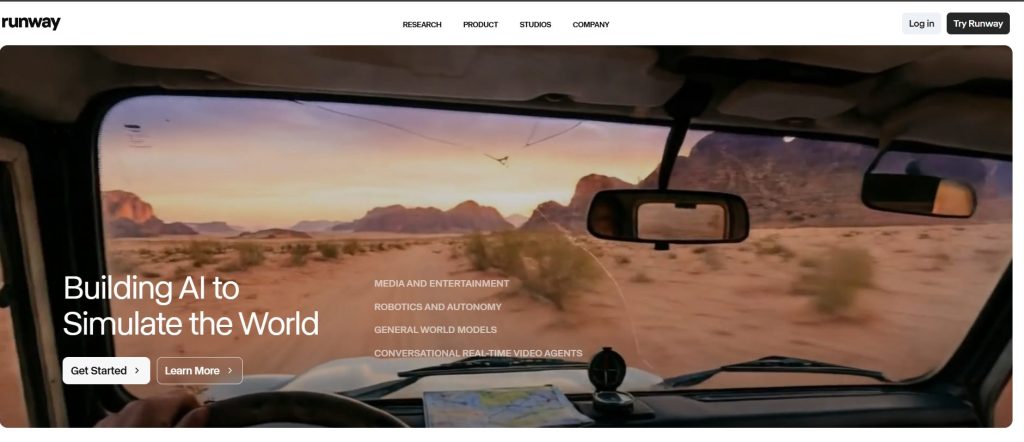
Runway focuses on AI-powered video editing and generation, offering tools that automate traditionally time-intensive processes like background removal, color correction, and even full video generation from text prompts. Marketing teams use Runway to create video ads, social media clips, and promotional content without using extensive video production resources. The platform’s AI can extend videos, remove unwanted objects, and apply cinematic effects that previously required professional editing software.
AI Research Tools & Competitive Intelligence
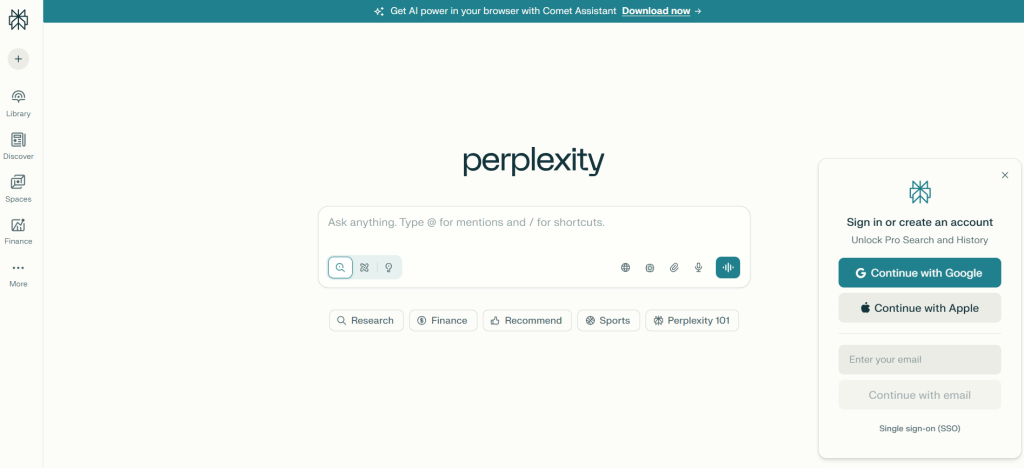
Perplexity functions as an AI-powered research assistant that provides sourced answers with direct citations to original content. Unlike traditional search engines, Perplexity synthesizes information from multiple sources and presents cohesive answers with footnotes linking to each reference. Marketers use it to rapidly research competitors, industry trends, market statistics, and audience preferences. For competitive analysis and market research, Perplexity represents one of the most efficient AI research tools available.
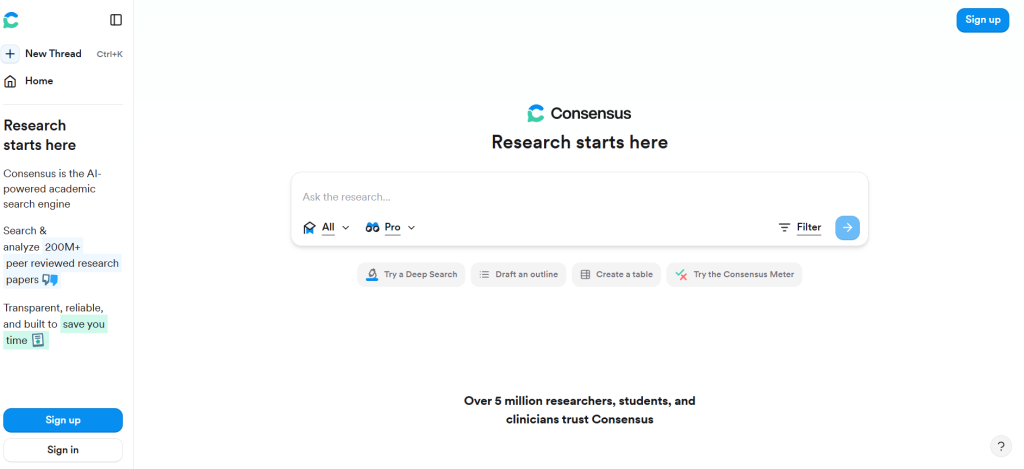
Consensus specializes in searching academic research papers and scientific literature, using AI to extract findings from peer-reviewed studies. Marketing teams researching health claims, consumer behavior studies, or technology trends use Consensus to quickly find authoritative evidence without reading entire papers. The AI summarizes findings, identifies consensus across multiple studies, and flags contradictory research.
ChatGPT for Research
While primarily known for content generation, ChatGPT functions as a powerful AI research tool when used strategically. Marketers use it to analyze competitor websites by pasting their content and asking for strategic insights, to summarize lengthy reports into key takeaways, and to explore market positioning by discussing different approaches conversationally.
AI Workflow Tools & Planning
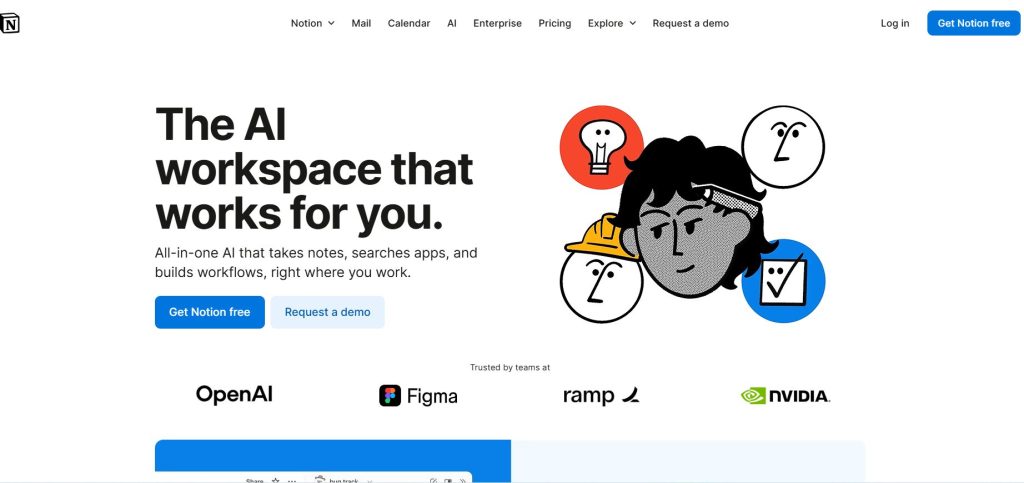
Notion AI integrates artificial intelligence directly into their popular workspace platform, enabling AI-assisted note-taking, document creation, task management, and project planning. You can use Notion AI to generate meeting summaries, create project briefs, organize research findings, and maintain knowledge bases with AI-assisted structure.
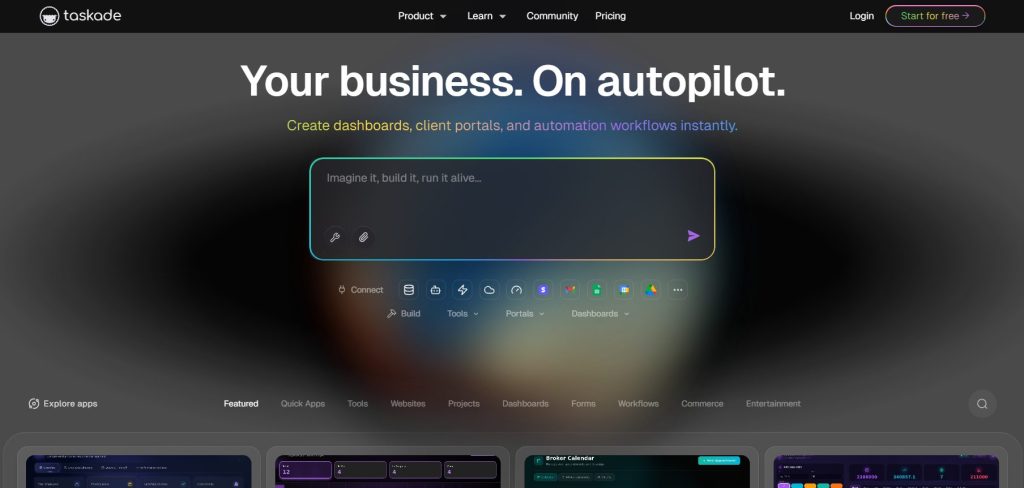
Taskade combines AI-powered task management with collaborative workspaces designed for marketing teams. The AI generates project templates, suggests task breakdowns for complex campaigns, and automates workflow creation based on project descriptions. Just describe a campaign, and Taskade’s AI proposes the complete task structure including dependencies, timeline, and assigned roles.
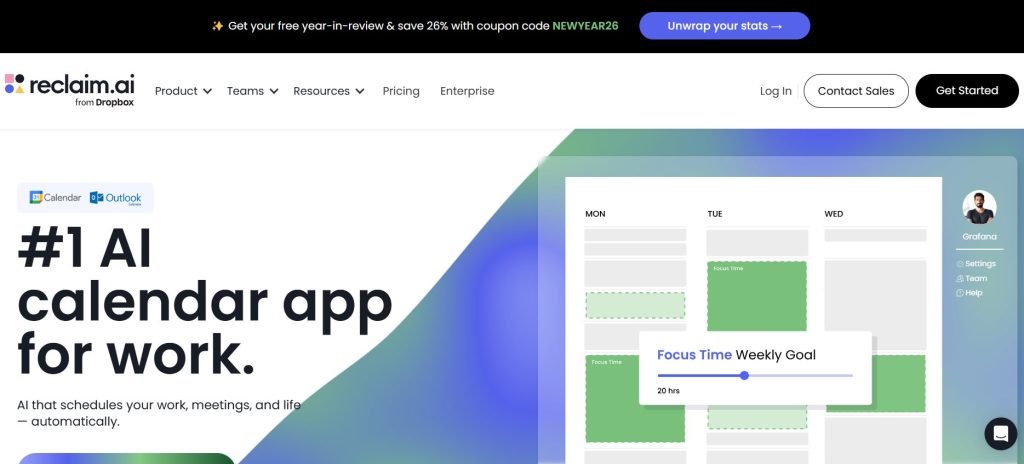
Reclaim AI focuses on intelligent calendar management and time optimization, using AI to automatically schedule tasks, meetings, and focused work time based on priorities and habits. For marketing professionals juggling content deadlines, campaign launches, and stakeholder meetings, Reclaim acts as an AI planning assistant that ensures critical work gets protected time slots.
Choosing the Right AI Tools for Your Marketing Strategy
Research shows that 93% of marketers use AI primarily to create content more quickly, but the best AI tools deliver value beyond just speed. If you are new to AI marketing tools, start with general-purpose platforms like ChatGPT to understand AI capabilities and then add specialized tools that address your specific bottlenecks (for example, social media production or research workflows).
The most successful implementations integrate multiple AI tools into cohesive workflows rather than using them as standalone solutions. A typical content marketing workflow might use ChatGPT for ideation and outlining, Jasper for draft creation, Midjourney for visual assets, and Notion AI for project management. The key lies in identifying which repetitive tasks consume your team’s time, then selecting best AI tools that automate those specific functions while maintaining quality standards.
Looking ahead, AI tools will continue evolving rapidly. 60% of marketers now use AI tools daily, up from just 37% in 2024, indicating accelerating adoption. The competitive advantage increasingly belongs to teams that master AI tool integration, combining human creativity and strategic thinking with AI’s processing power. Whether you’re exploring AI tools for social media, AI research tools for competitive intelligence, or AI workflow tools for project management, the future of digital marketing clearly involves human-AI collaboration.